
Cairn
The world premiere of a new play, ‘It is Easy to be Dead,’ written by Neil McPherson and produced by Bréon Rydell took place in Summer 2016 at the Finborough Theatre, London.
The play, based on the life and literary works of a Scottish poet, Charles Hamilton Sorley, who was killed in action, aged 21y, in WW1.
It is Easy to be Dead,’ transferred to the Trafalgar Theatre in London’s West End, in November 2016, and was nominated for an Olivier Award, the following February.
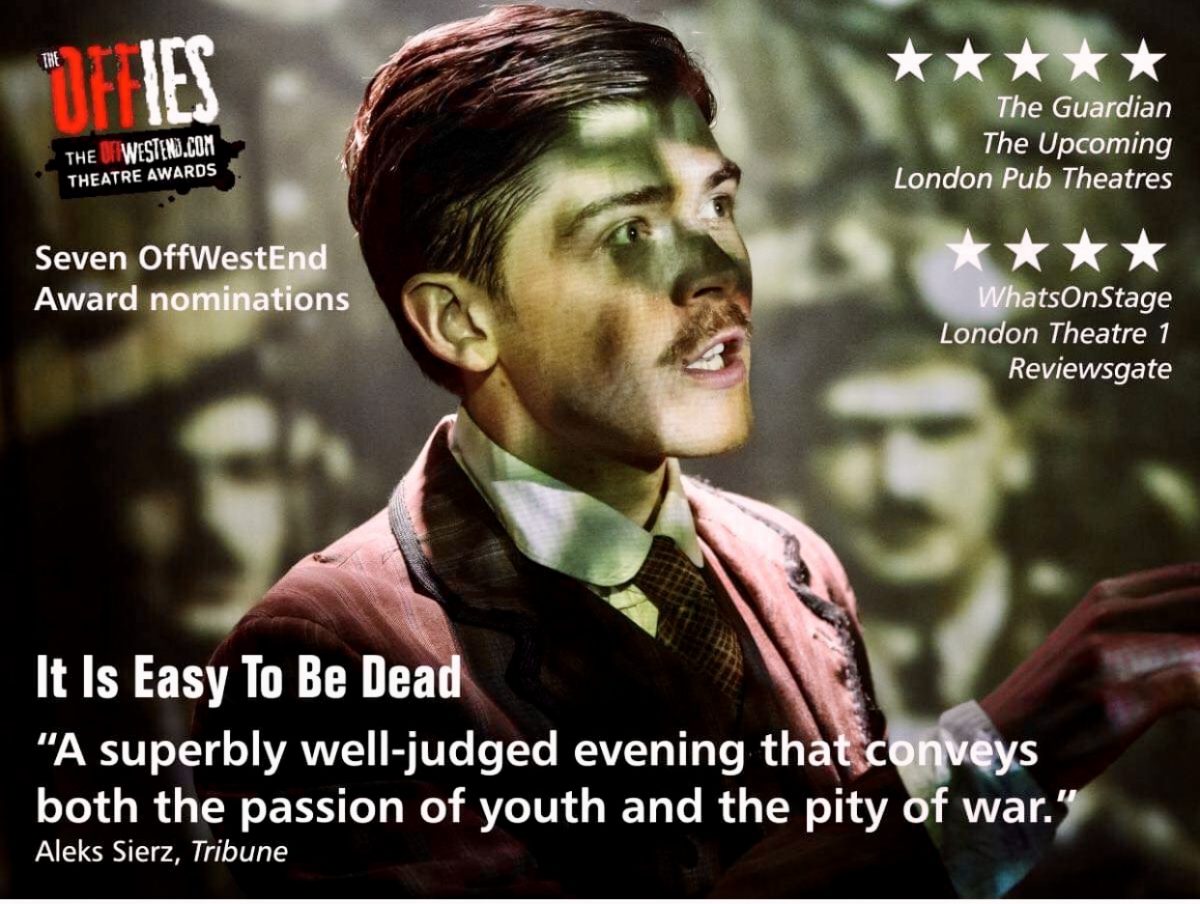 It Is Easy To Be Dead—reviews and awards poster.
The Scottish Poetry Library, Edinburgh
After two and a half years of spearheading a campaign to bring the forgotten Aberdonian WW1 poet home to Scotland, Bréon Rydell was invited to host, together with Michael Pederson, one of the founders of Neu! Reekie!, a special commemorative event in honour of CHS, at the Scottish Poetry Library, held in October 2018.
In his presentation, Bréon was able to highlight the remarkable literary legacy of Sorley, brought to life in the play written by his friend and fellow Celt, Neil McPherson.
Bréon went on to stress to the packed hall how important it was that Sorley’s poetry and prose were both recognised and protected, not least in his native Scotland.
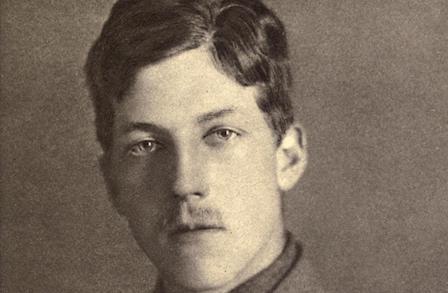 Charles Hamilton Sorley, Scottish poet (1895-1915)
Bréon Rydell and Michael Pederson recited poems from the play and also some of their own work, including one of Bréon’s poems, ‘The Sentinels,’ which had been included as the Epilogue to the recently published book, ‘Homage to Humanity,’ by the photojournalist, Jimmy Nelson.
Michael read a piece from his critically acclaimed ‘Oyster’ collection, in addition to a poem published in Neu! Reekie!’s #Untitled One anthology, ‘Frightened Rabbit,’ by recently demised Scottish singer, songwriter, Scott Hutchison.
Alex Knox, who played the part of Charles Hamilton Sorley in the London productions of ‘It is Easy to be Dead,’ read extracts from the play, and provided insight into how Sorley’s poems and letters had shaped his own stage performance.
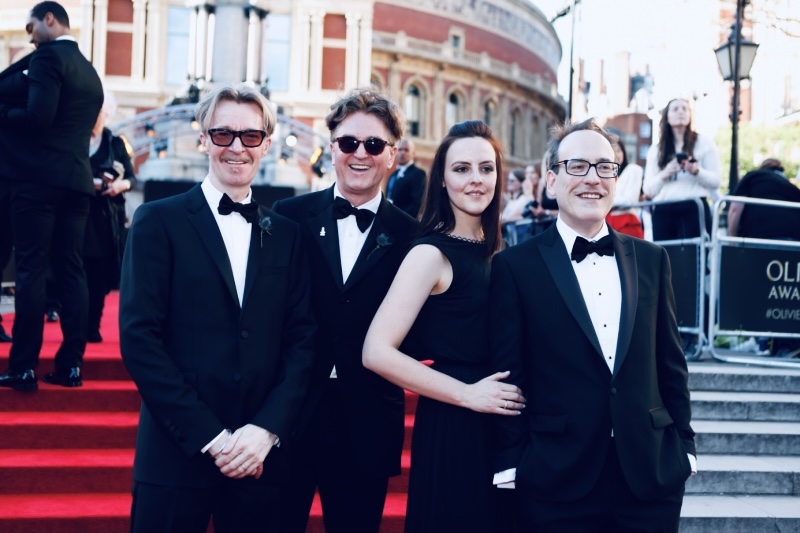 L-r Garry Scott-Irvine, Bréon Rydell, Jane Wainwright, Neil McPherson
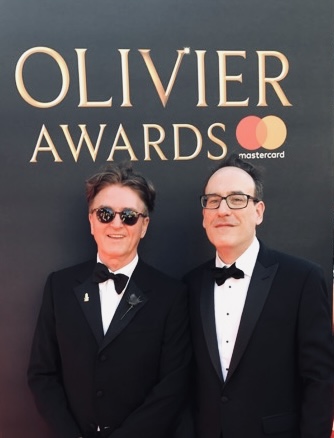 L-r Bréon Rydell (Producer) Neil McPherson (Writer)
Congrats Neil—28 years in the making …
Stop Violence Against Women
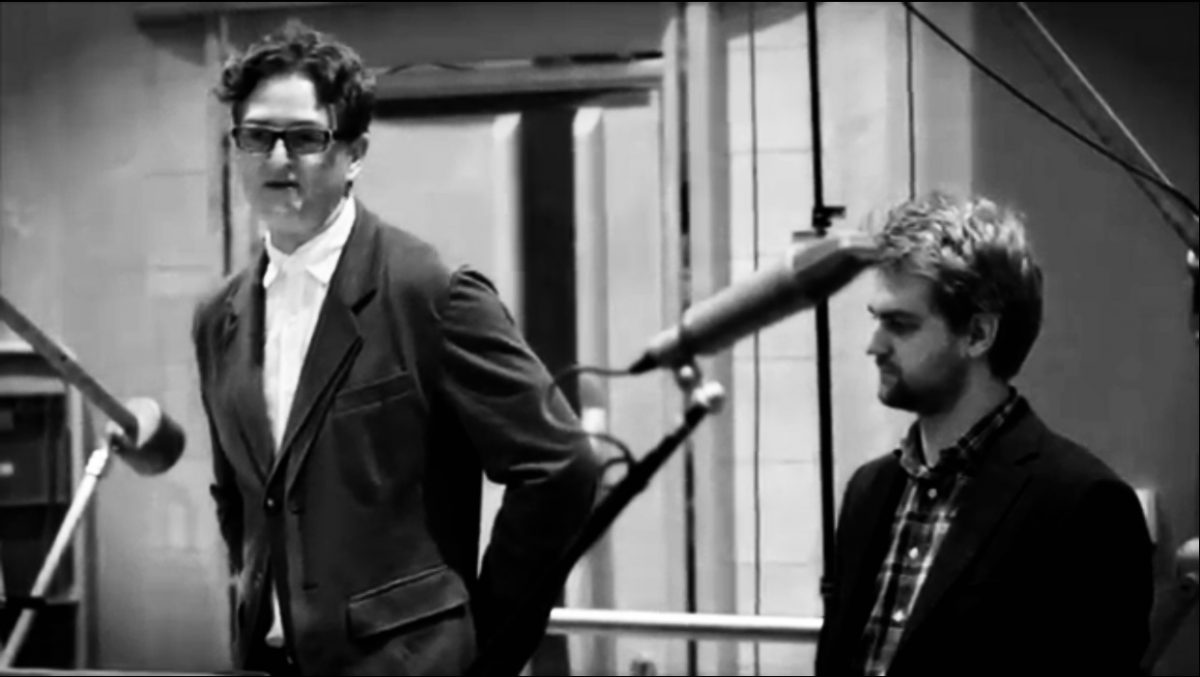
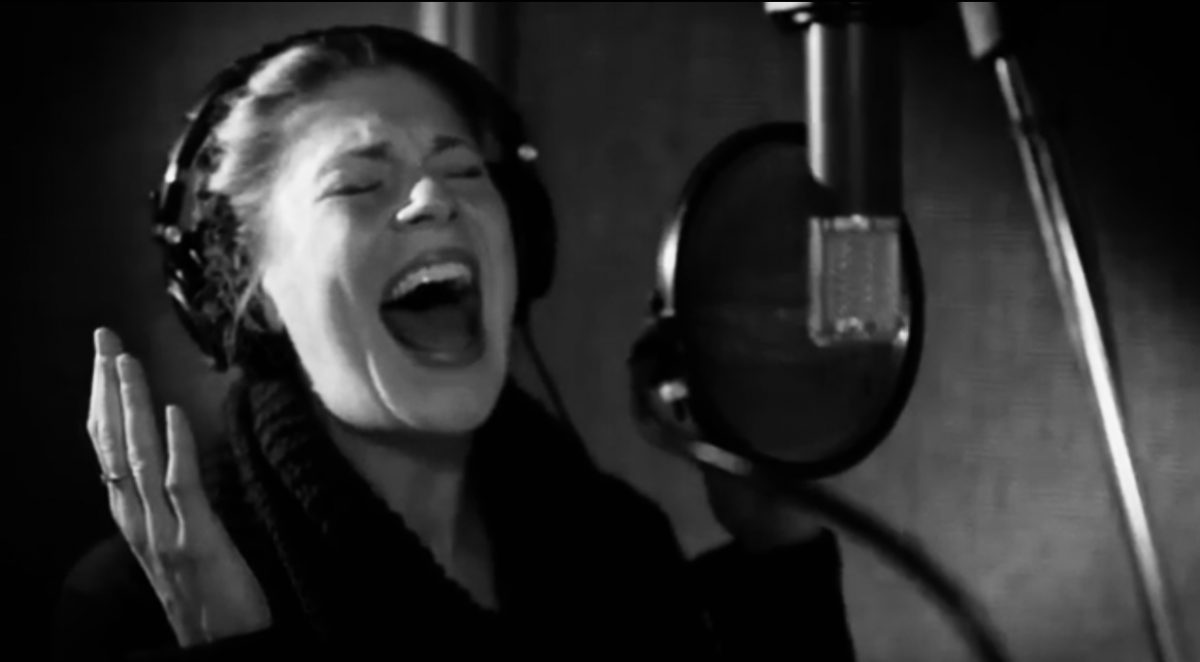
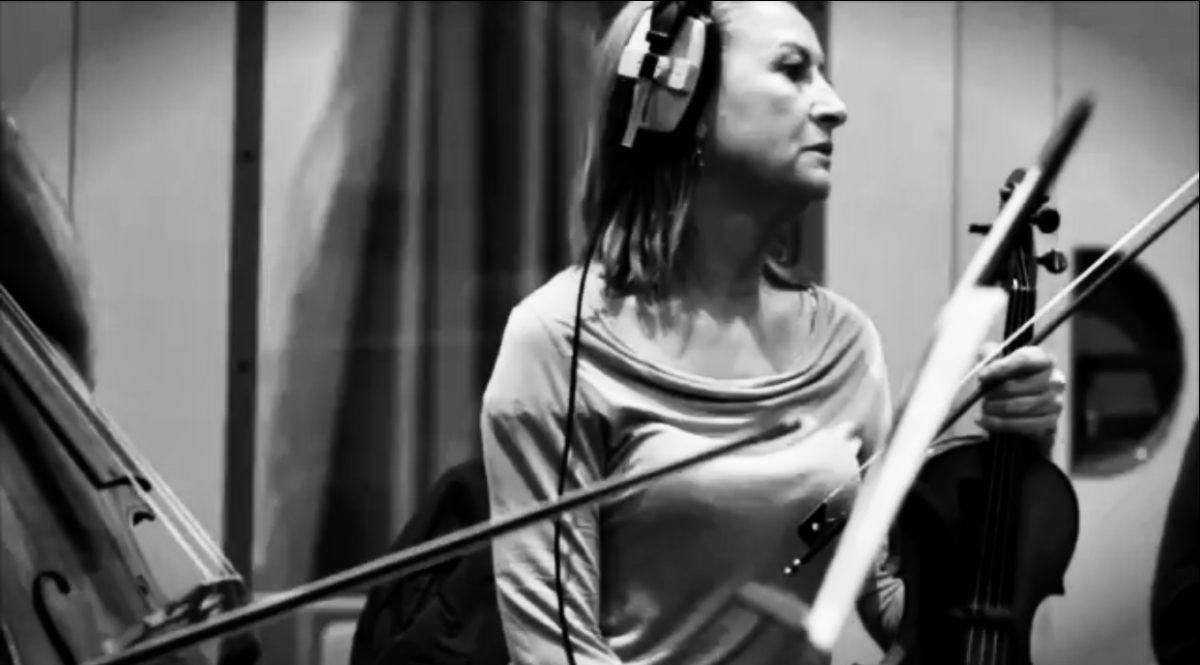
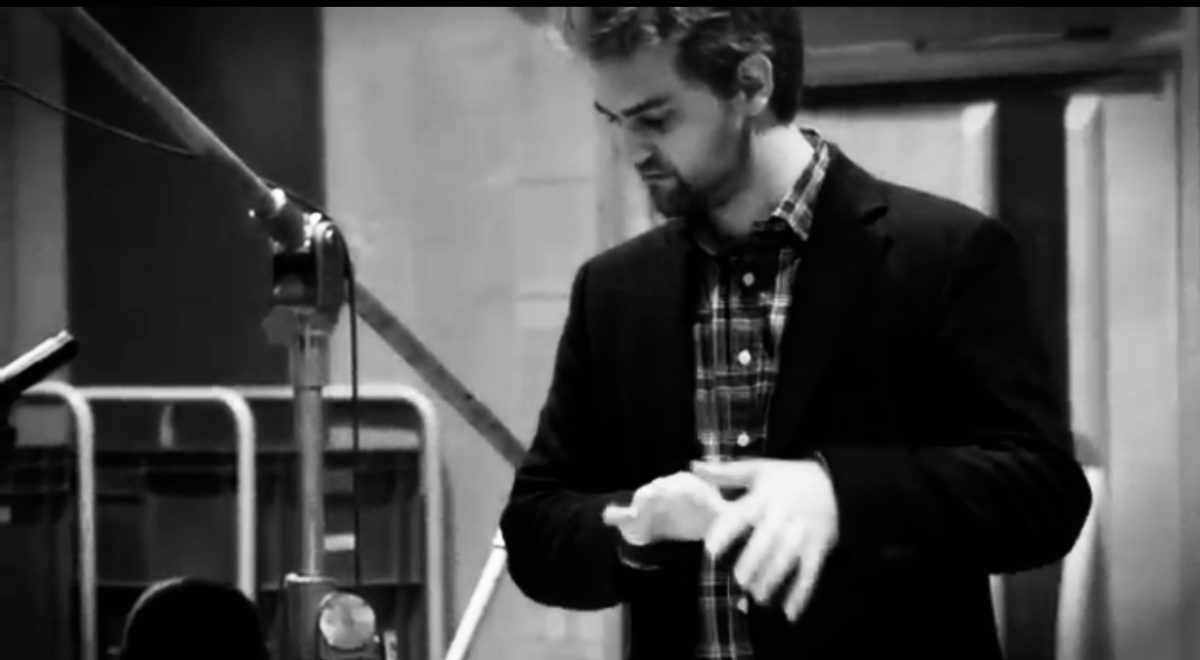
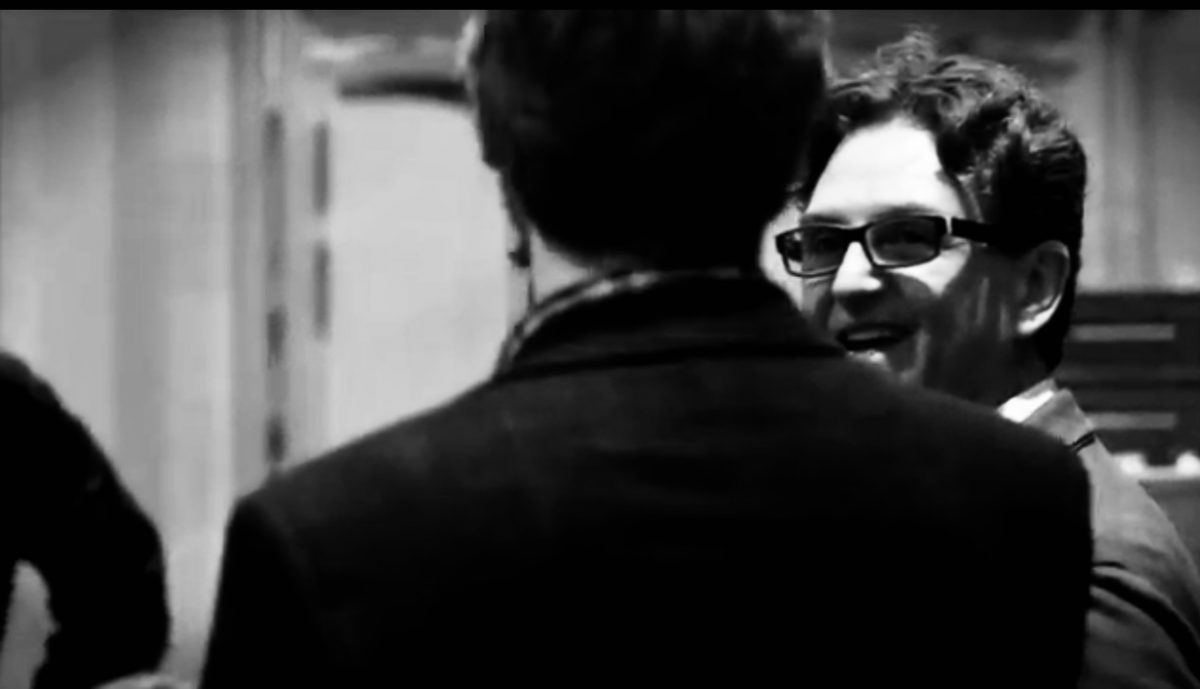
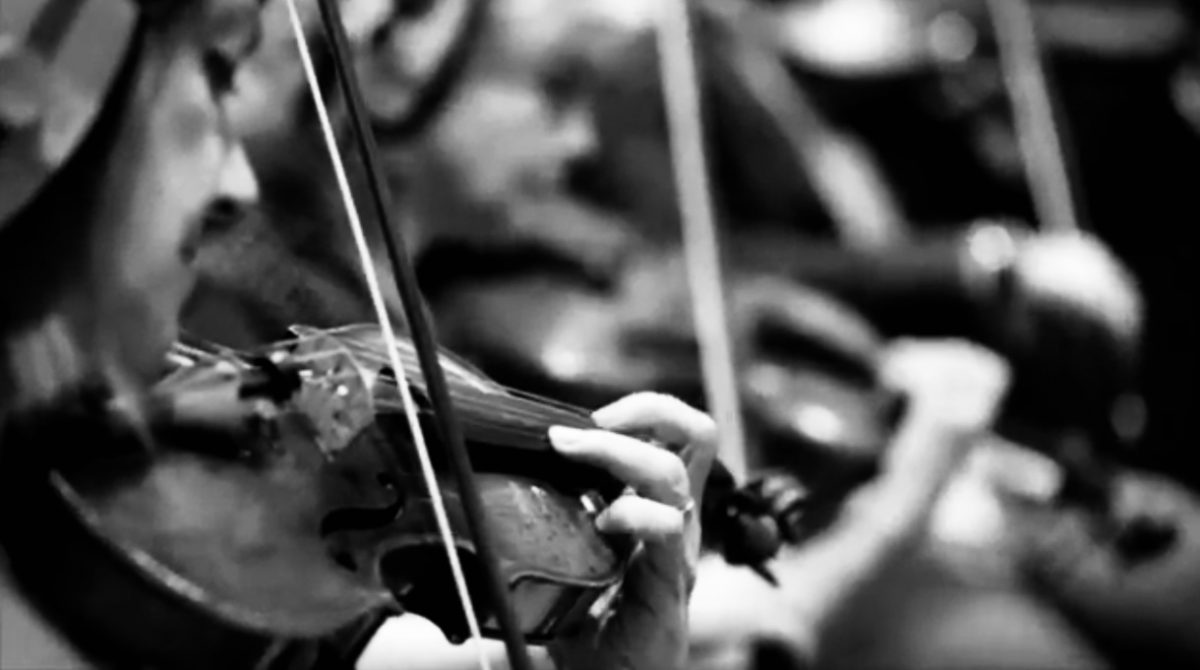
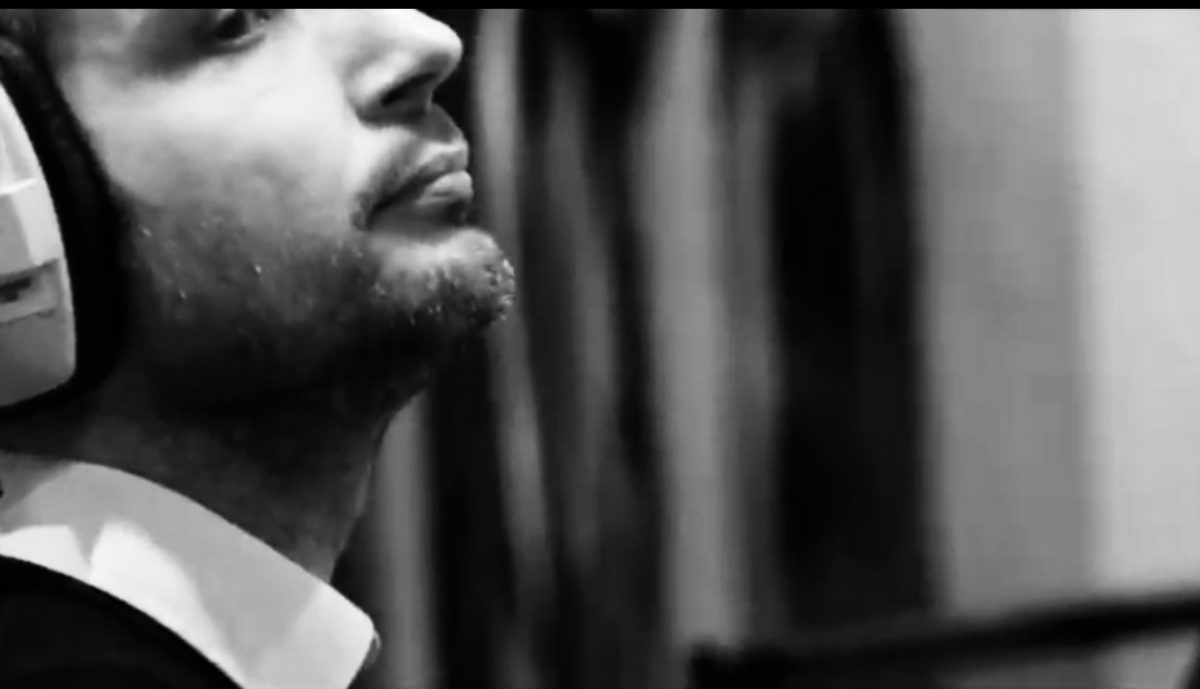
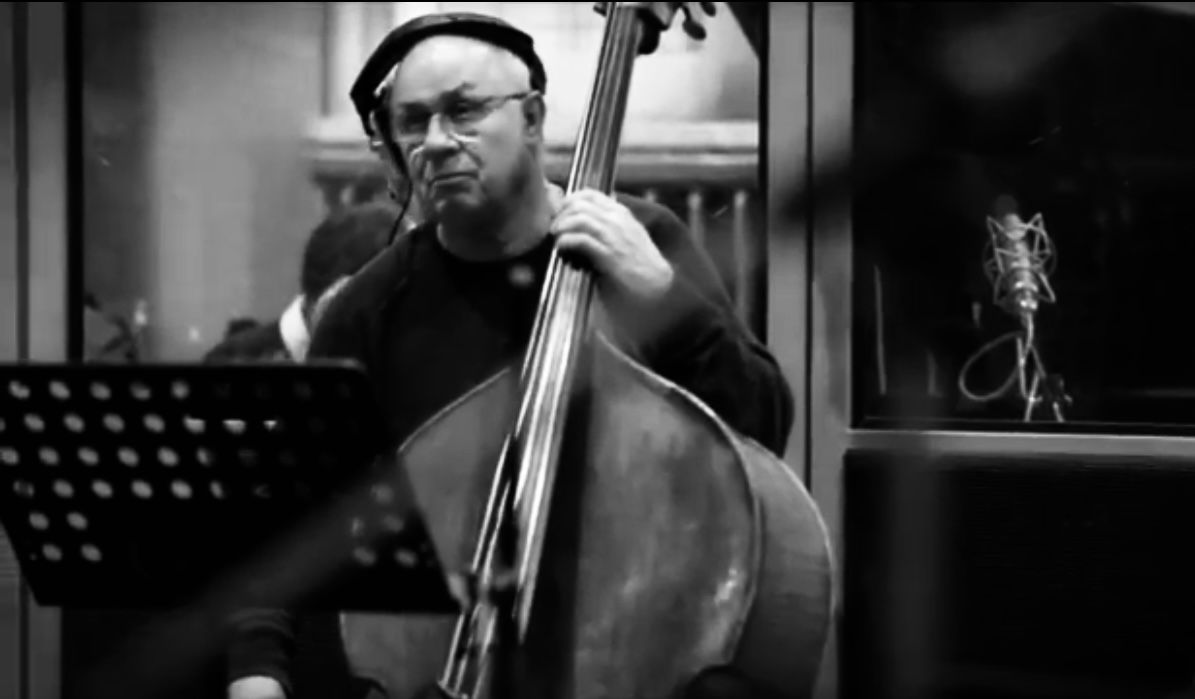
Bréon’s composition Erin’s Song, was performed and recorded in 2014 by Tamsin Carroll with Alex Baranowski, The London Metropolitan Orchestra and pianist, Magnus Gilljam. This song became part of the campaign Stop Violence Against Women aimed at creating awareness of misogyny.
ACCENT— born in the Scottish Borders, forged in London, remembered in music and myth
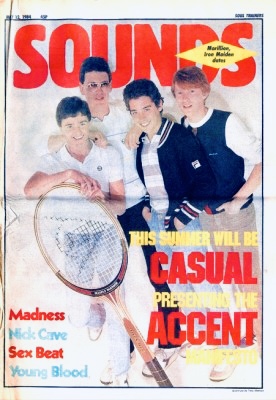 Cover of Sounds Magazine (Summer 1984)
National recognition. Accent’s presence and songs carried. (Photo: Nobby Clark.)
Cover of Sounds Magazine (Summer 1984)
National recognition. Accent’s presence and songs carried. (Photo: Nobby Clark.)
ORIGINS
Bréon Rydell grew up in the Scottish Borders, in a Scots–Irish musical family. A natural Celtic poet from the beginning, he carried a love of language and melody that grew alongside his passion for music. Steeped in Celtic folklore and mythology, and drawn early to theatre and film, he shaped words into songs before he had a stage to sing them on.
At fourteen he discovered David Bowie, whose daring showed him how poetry, performance, and identity could fuse into one art. At the same time, he was absorbing the work of singer-songwriters like Bob Dylan and Joni Mitchell, whose lyrical storytelling left a lasting mark on his own voice.
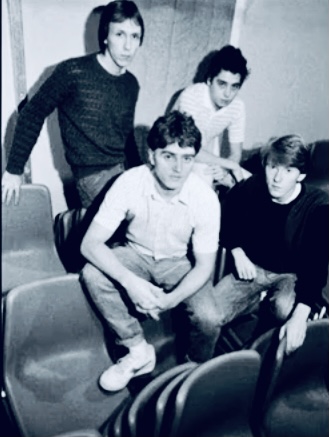 Band Portrait, London ACCENT line-up: Bréon (lead vocal/lyrics/co-composer), Mick Robinson (bass/co-composer), Steve Flynn (guitar), Chris Munday (drums). Four parts of one engine.
ACCENT
In the mid-eighties, Bréon moved to Fulham, London with a sketchbook of lyrics and melodies, determined to form his own band. Out of that vision came ACCENT, co-founded with bass player Mick Robinson. Bréon wrote all the lyrics, co-wrote the music, created the orchestration, fronted the band as lead singer. Robinson introduced guitarist Steve Flynn, and a press advert in Melody Maker brought in drummer Chris Munday.
Each player shaped the sound: Mick’s bass and love of music, Steve’s sharp, propulsive guitar lines, and Chris’s drive on drums gave lift to Bréon’s songs. Apart from a brief personal break, Chris was with ACCENT for almost its entire three-year life — a steady anchor on stage and in rehearsal rooms.
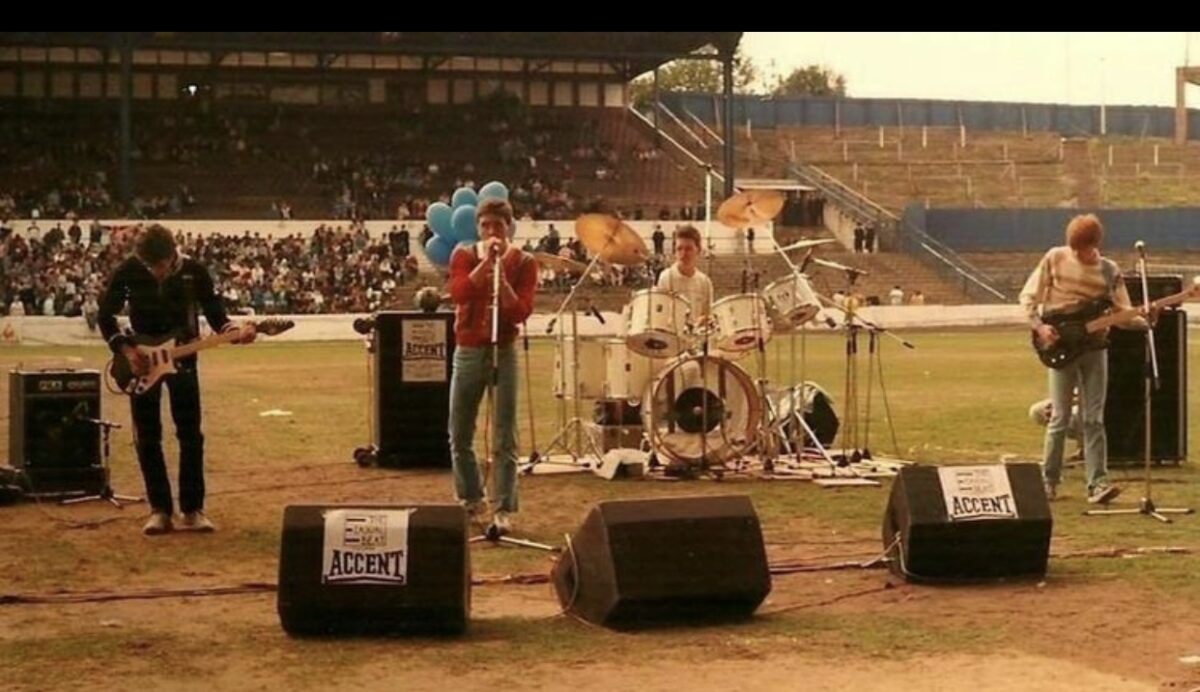 Chelsea FC, Stamford Bridge (1984)
ACCENT performing live on the pitch — Bréon leading the band, with Chris driving the rhythm and Mick and Steve powering the backline. A terrace-to-stage moment
Chelsea FC, Stamford Bridge (1984)
ACCENT performing live on the pitch — Bréon leading the band, with Chris driving the rhythm and Mick and Steve powering the backline. A terrace-to-stage moment
From the outset, ACCENT’S material carried the edge of a Celtic poet turned frontman. Bréon’s lyrics confronted misogyny, racism, homophobia, and sectarianism head-on. Rooted in lived experience — including abuse and exclusion growing up in Scotland — the work had urgency and bite. Against the tribalism of the times, from football terraces to the conflict in Northern Ireland, the band articulated a broader vision: community, civil rights, and a shared human dignity that refused to be divided.
Abbey Road Steps
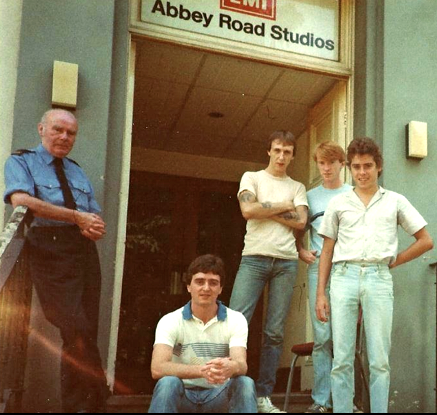 ACCENT outside Abbey Road Studios, mid-1980s — a rare photo from the sessions with Tony Clark, where Bréon created his first orchestral work for the tracks.
ACCENT aligned with the rising casual fashion movement, played Chelsea FC’s Stamford Bridge, recorded at Abbey Road Studios with producer/engineer Tony Clark, and cut tracks at EMI’s Manchester Square. Their anthem “We Are Lost” became a rallying point at gigs. It was at Abbey Road that Bréon created his first orchestral work for the tracks — an early glimpse of the broader musical vision he would continue to develop.
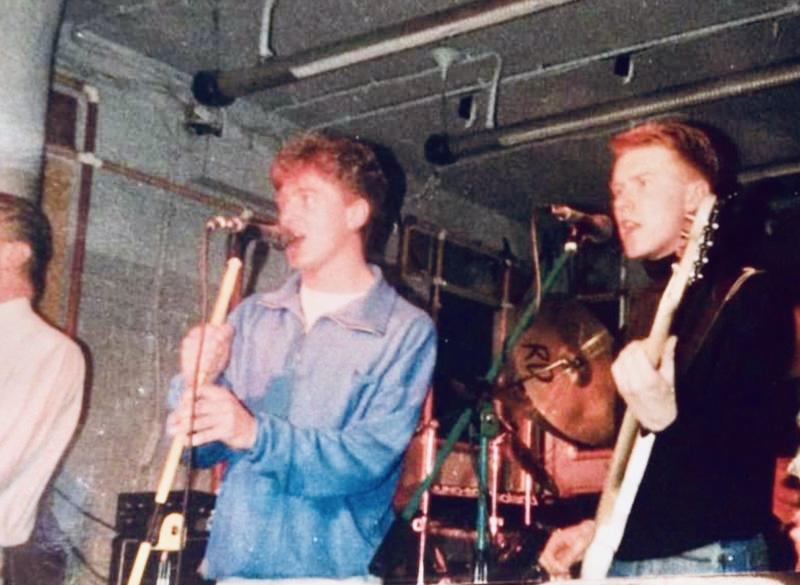 Rock Garden, Covent Garden (1985)
The final gig. Short life, fierce run — Bréon, Chris, Mick, and Steve closing the chapter together.
Rock Garden, Covent Garden (1985)
The final gig. Short life, fierce run — Bréon, Chris, Mick, and Steve closing the chapter together.
The high-water mark came in summer 1984, when ACCENT appeared on the cover of Sounds magazine — a moment that confirmed how far the songs and the presence had travelled. (Photo: Nobby Clark.)
Though their time together was brief, the intensity still resonates. For Bréon, the true triumph was wielding words and music as weapons against prejudice and violence — the mark of a Celtic poet using rock as his medium. The Abbey Road sessions also marked the beginning of his orchestral work, a thread that would continue to grow through later projects.
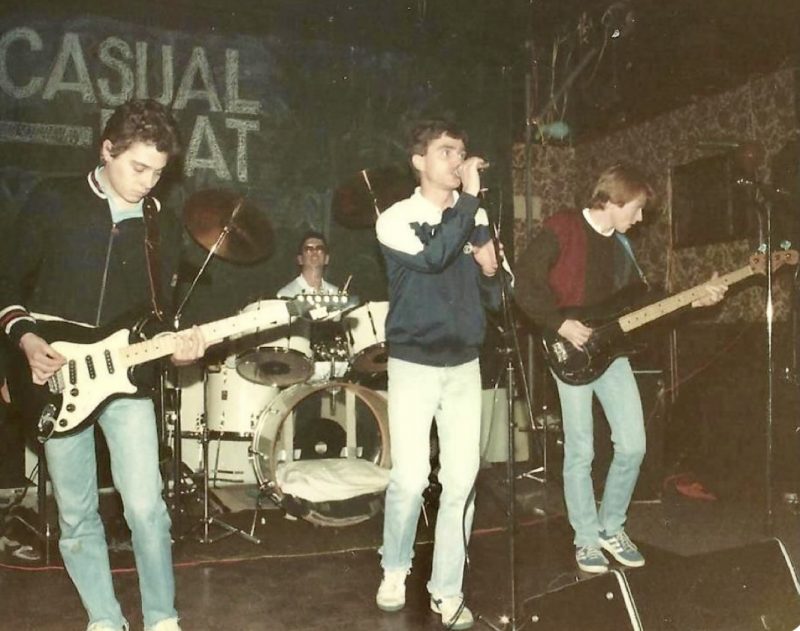 Live at the Casual Beat Club, Fulham – A defining London gig that tied ACCENT to the casual movement of the day.
Decades on, the songs and stories continue to stir interest. What began in the Celtic Lands and took shape in London’s clubs and studios has not been forgotten — and it falls to those who were there — Bréon, Chris, Mick, and Steve — to keep ACCENT’S real legacy alive.